In my last article, I wrote about the job book. This one picks up where that left off.
This week I sat in on a webinar with smart building solution providers. These are the people who build the data platforms behind fault detection, energy analytics, digital twins and, now, AI. When BIM came up, the panel agreed: in the state it reaches turnover, the model is not useful to them.
That is the BIM-on-a-shelf problem. The owner pays for a detailed model; it is handed over at closeout, and it sits. The smart building team starts again from the building automation points and walks through the plant rooms.
I don’t think the answer is to give up on BIM. I think the model is missing its bridges.
Two gaps, not one
The job book doesn’t line up with the model. Manuals, warranties, and test reports are filed by specification section. The model is organized by Revit category and family. With no shared key, nobody can go from an asset in the model to its documents, or from a warranty back to the asset it covers.
Building data is not OT data. The model holds design data: what a thing is, where it is, how big it is. Smart building platforms run on operational technology (OT) data: live temperatures, statuses and alarms, each tied to a controller address. A model parameter reading “AHU 3” has no connection to a BACnet point named “AV-104”. The speakers kept coming back to the same idea: data has to be trusted, in context and governed before it means anything.
Both gaps have the same root. At handover, there is no shared identity and no shared vocabulary between the model, the job book and the systems that run the building.
Start with the standards each side already uses
We don’t need a new language. Each side already has one; they just never meet.
- The BIM side has ISO 19650 for information requirements, delivery milestones, and acceptance, and IFC (ISO 16739) for open exchange. It also has the classification systems job books already followed, such as Uniformat, MasterFormat and OmniClass.
- The OT side has Project Haystack tags for equipment and points, and Brick for relationships: what feeds what, which room equipment is in, and which point belongs to which equipment. ASHRAE 223P, a semantic modeling standard for building monitoring and control, is still in development and is expected to be published by the end of 2026.
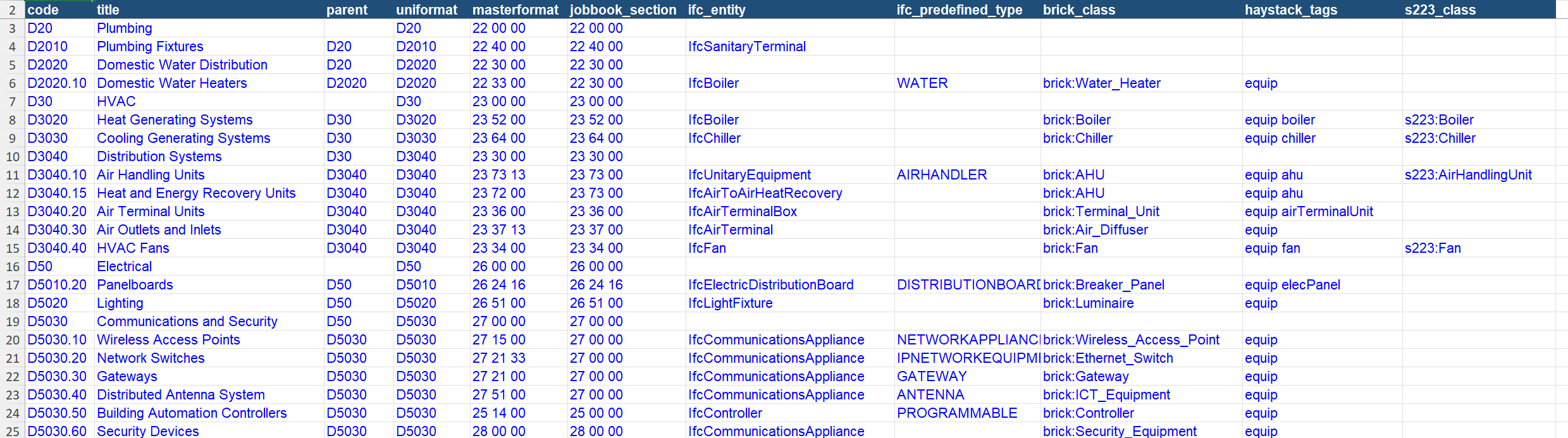
The bridge between them is a mapping, and the owner should own it. Each owner classification maps to an IFC class, a Brick class, and a set of Haystack tags. Each system type maps the same way. Define it once and apply it to every project.
Bridges have to be predictable
A bridge rebuilt on every project isn’t a bridge. It’s a one-off integration, and it won’t survive the next renovation. Predictable means five things:
- One owner standard. Written once, in a spreadsheet the owner controls, and handed to every consultant and contractor.
- Classification is the join. An air handler carries the same code at LOD 100 and at LOD 400. Its job book section, IFC class and OT class all follow from that code.
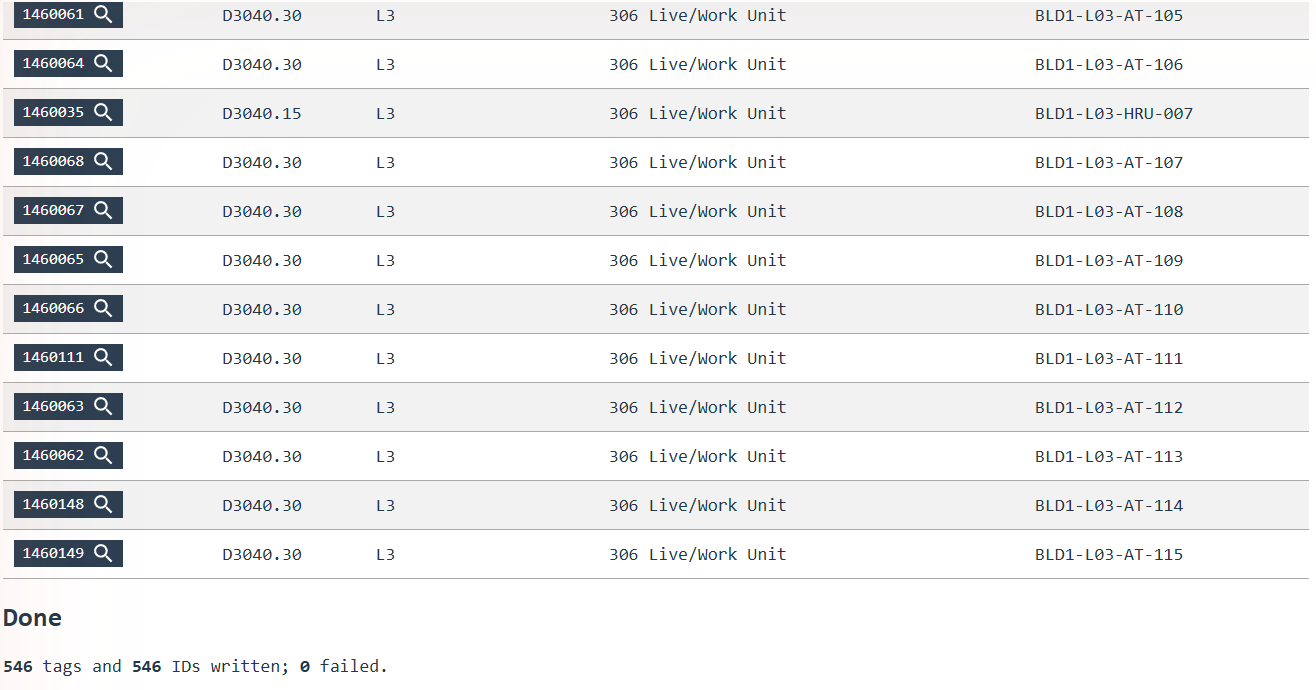
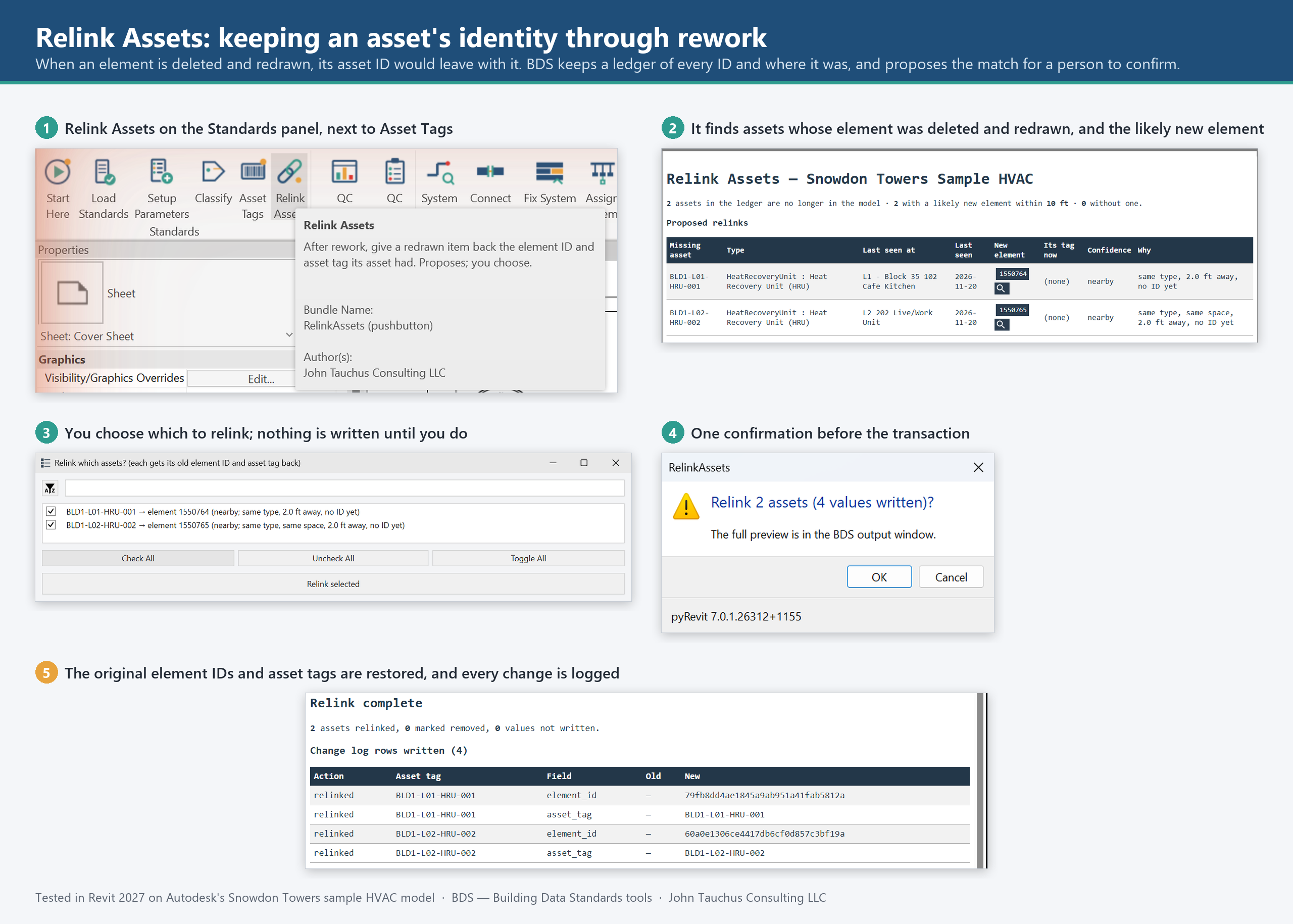
- Identity is permanent. Each asset gets one ID that lasts from design through operations. A Revit element ID changes when models are split or copied, so it can’t serve.
- Checked at every milestone. Missing data is found at design development, not discovered at closeout.
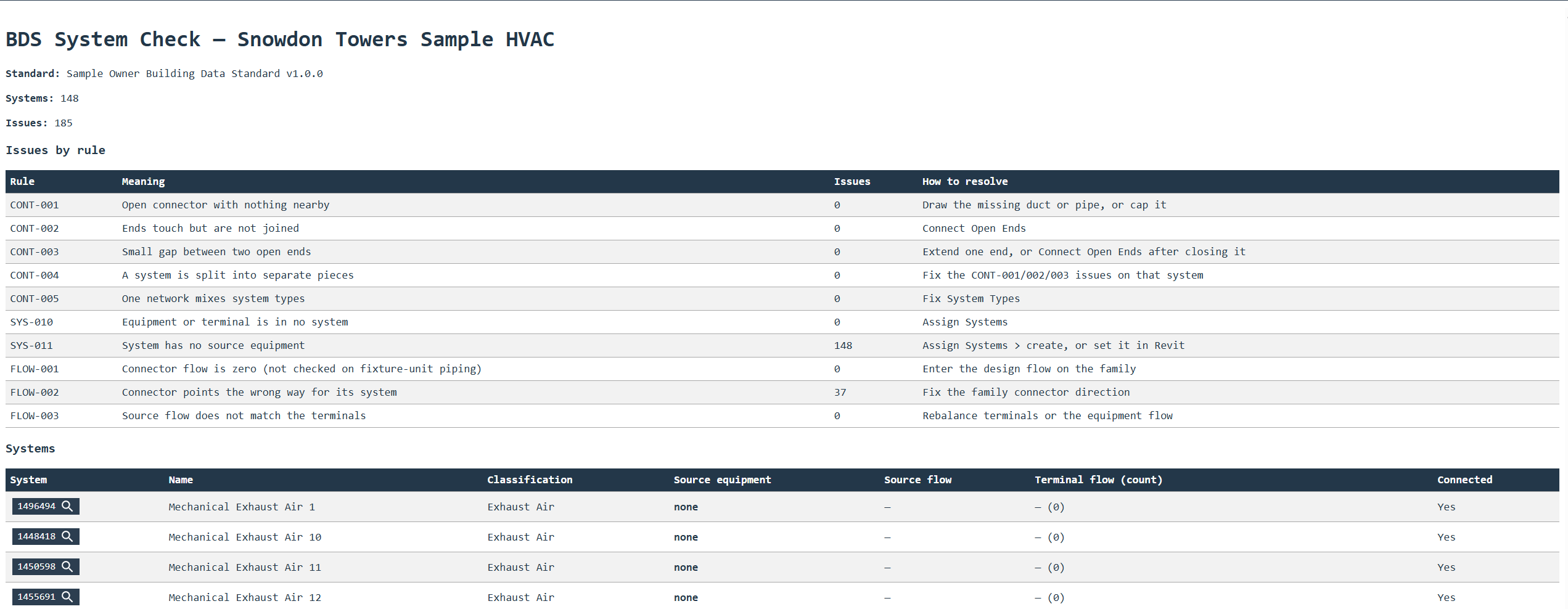
- Relationships are verified in the model. Systems are connected, equipment is assigned, and what feeds what is traced before handover, not guessed afterward.
Why AI raises the stakes
AI tools are being pointed at OT data to find patterns: a pump drifting out of range, a chiller short-cycling, two air handlers fighting each other. In one building, an experienced engineer can explain what each point means. Across a portfolio of fifty buildings, a pattern is only recognizable if the data looks the same everywhere: the same equipment classes, the same relationships, and the same names for the same things.
If “AHU-1” is a rooftop unit in one building and a fan coil in another, the AI learns noise. As one speaker put it, AI can only answer from data that exists, and every gap in the record is a blind spot. Consistency across the enterprise isn’t a nice-to-have. It is what makes a pattern a pattern.
This is where the model earns its place again. Live data says what is happening. The model can say what each piece of equipment is, where it is, what it serves and what it connects to. That context only helps if every building’s model is delivered to the same standard.
What I’m building
I’ve been building a working prototype of these bridges as a set of tools inside Revit. The owner writes the standard in Excel. The tools then:
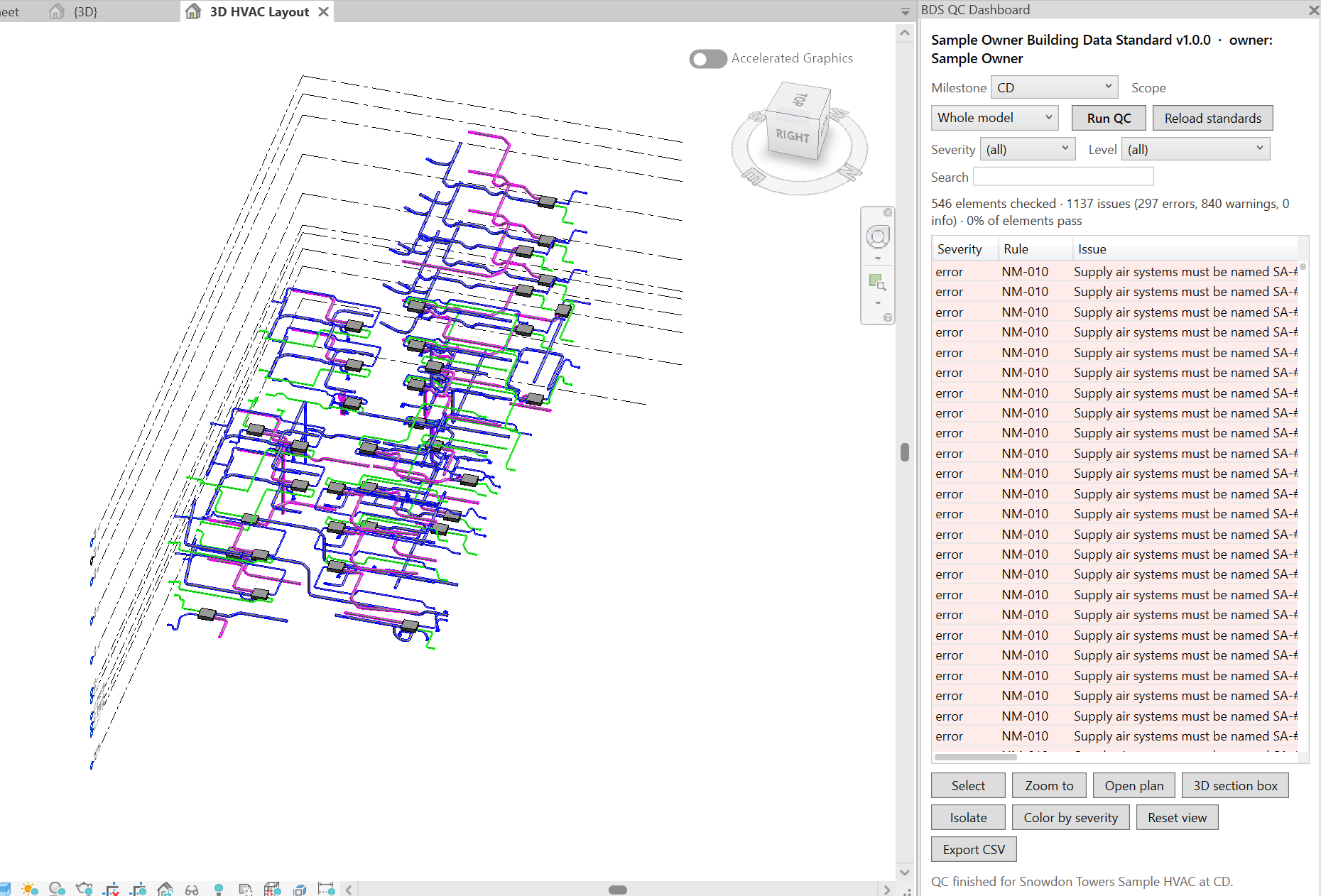
- check the model against that standard at each milestone, and show every issue in place in the model;
- classify and tag equipment, and verify that systems are connected and assigned;
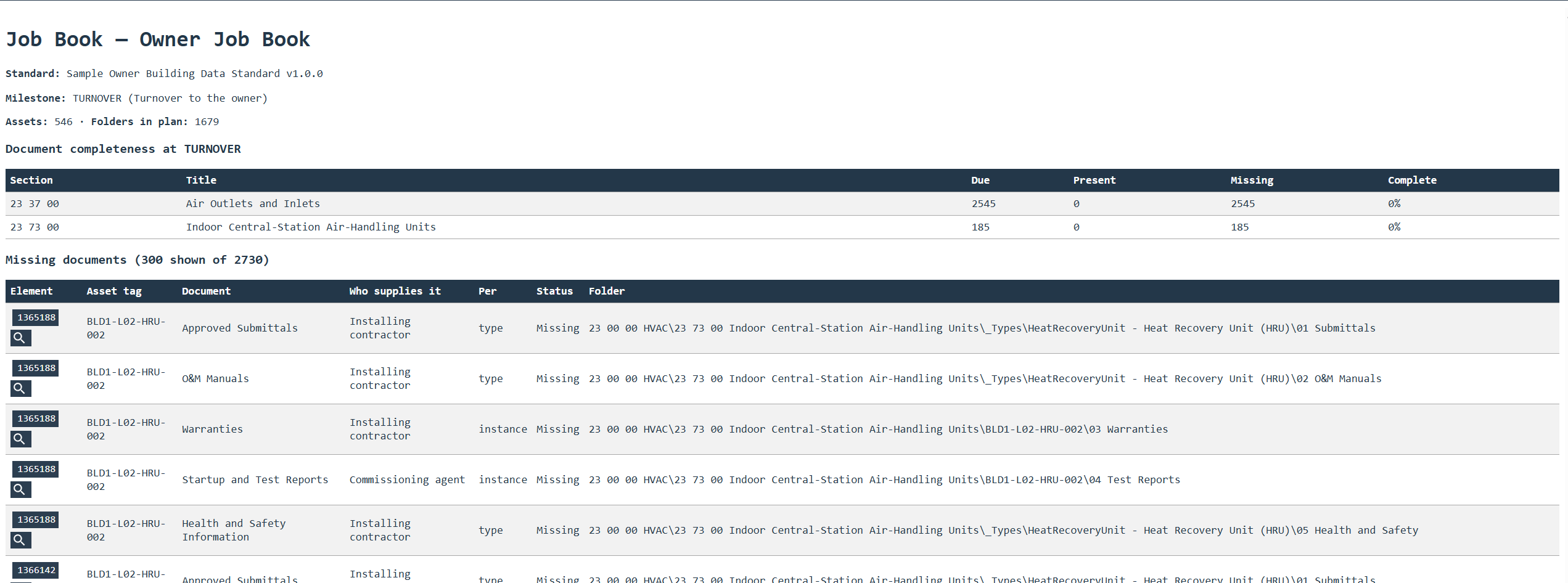
- map each asset to its job book folder and report which documents are still missing;
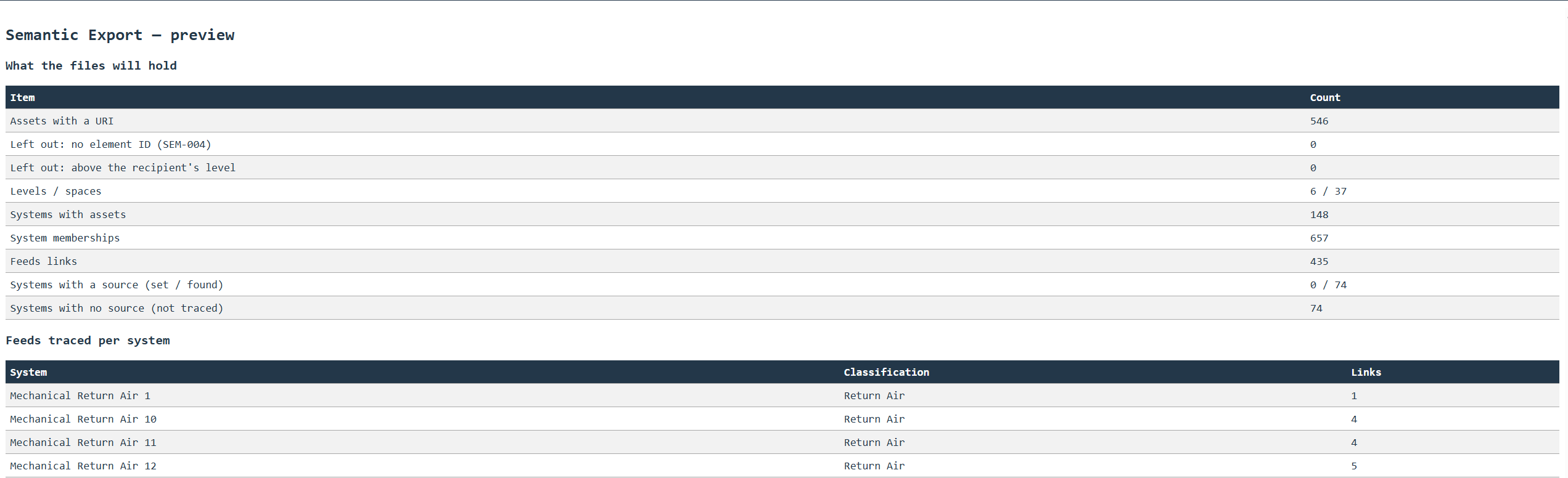
- export IFC, Brick and Haystack files from the same data;
- give the controls contractor a point schedule that binds each automation point to an existing asset ID;
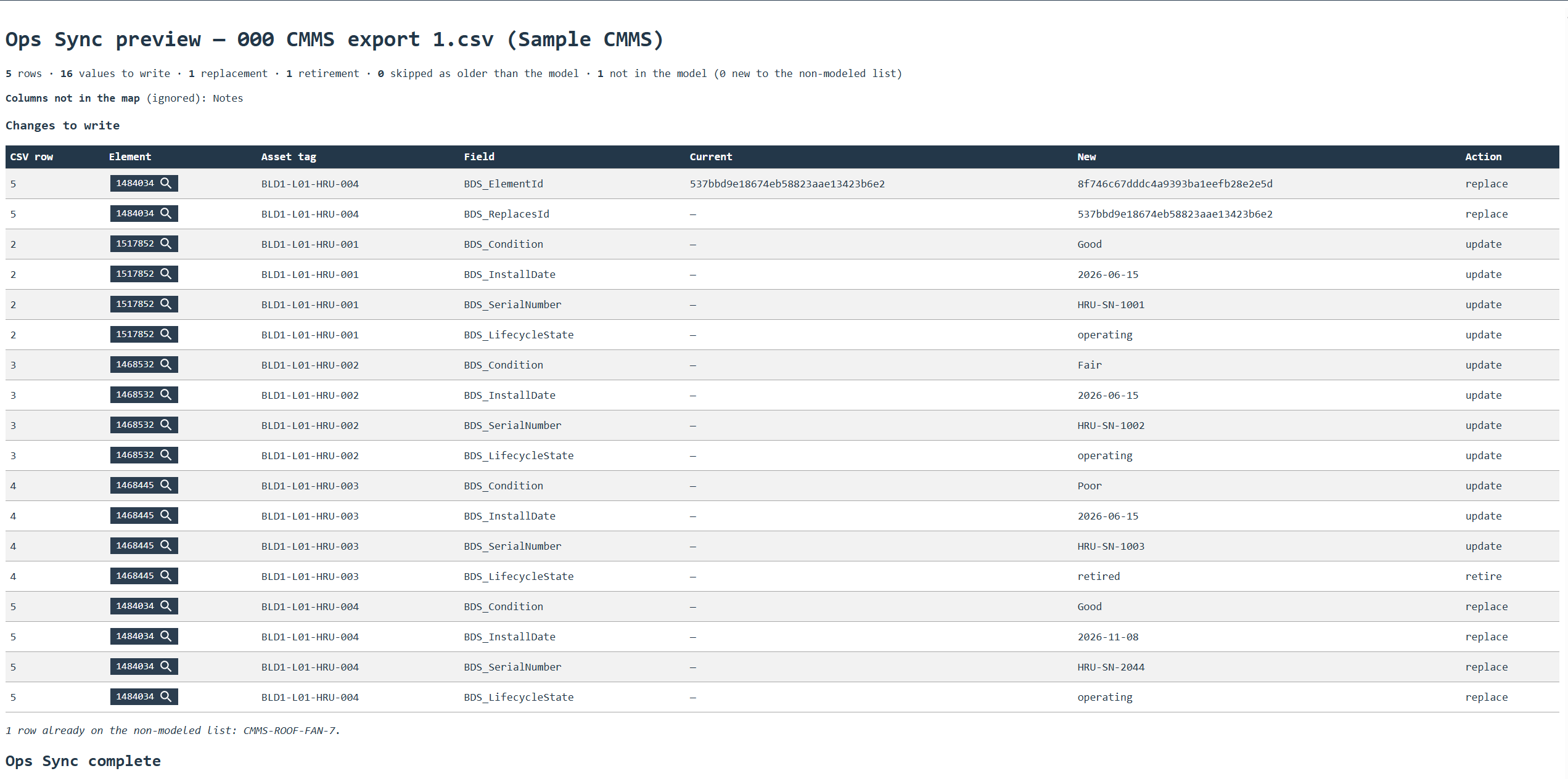
- bring changes from the maintenance system back into the model, so it doesn’t go stale.


The test I use is simple: can the data answer the questions people will actually ask? For example:
- Which VAV boxes does AHU-3 serve?
- Where are the O&M manual and warranty for this pump?
- Chiller 2 tripped on low condenser water flow. What feeds it?
- Which automation point is this air handler’s supply air temperature?
- Which plant rooms have equipment but no network signal?
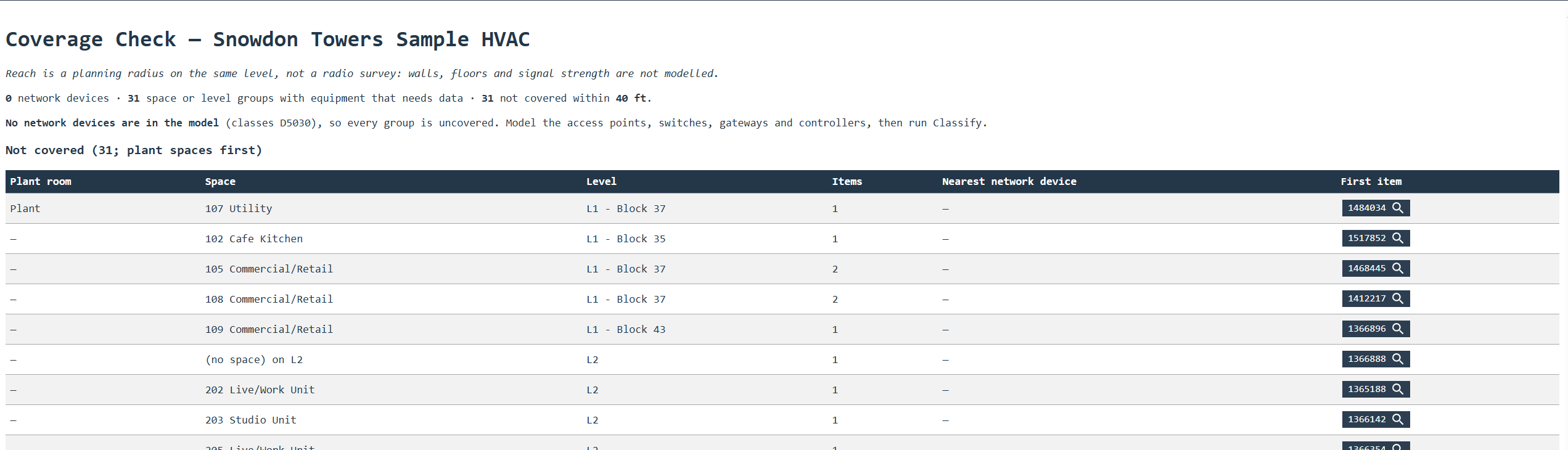
If the model can answer those at handover, it doesn’t go on the shelf.
Let’s compare notes
The smart building industry is right that today’s turnover model doesn’t help them. I think that’s a delivery problem, not a BIM problem, and it is fixable with standards that already exist and bridges that work the same way on every project.
If you’re an owner, integrator, BIM manager or operator, I’d like to hear from you. What question do you wish the model could answer at handover? And where has the shelf cost you the most? Send me a note or message me on LinkedIn.